Loading projects
Eyon Drive
A multi-service mobility app for the Beninese market. Motorbike taxi (zem), tricycle and car, built-in wallet — from sign-up all the way to rating the driver.
About the project
Éyon is a mobility app designed for Benin. The starting point wasn’t to copy Uber, but to start from how people actually get around in Cotonou and Porto-Novo.
That translated into three structural decisions.
The zem as the main category. The motorbike taxi isn’t a secondary option, it’s the dominant means of transport. It comes first in the selector, ahead of the tricycle and the car.
Letting users choose their driver. Two modes coexist: automatic assignment by the company, or manual selection from a list of nearby available drivers, with a viewable profile. In Benin, many people have “their” zemidjan. Removing that choice would have been a mistake.
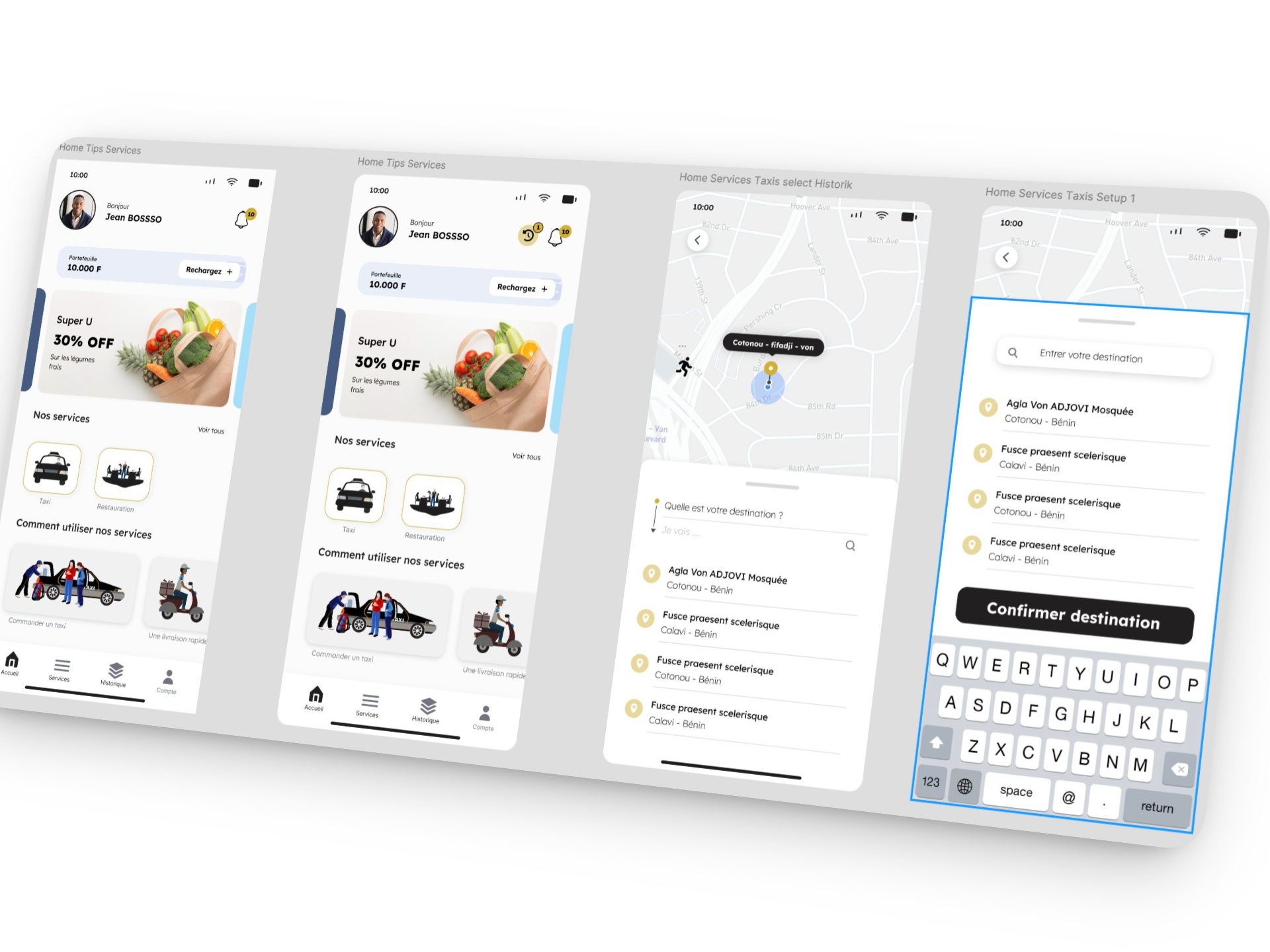
A wallet first and foremost. Balance and top-up sit on the home screen, under the user’s name. Where mobile money comes before bank cards, payment isn’t an end-of-journey step: it’s a permanent state users need to see.
The design work
I designed the complete journey, treating failures on a par with the main path: payment declined, ride cancelled by the driver, vehicle check on arrival, in-ride chat. These are the screens that get skipped in presentations — and that decide whether the app holds up in real use.
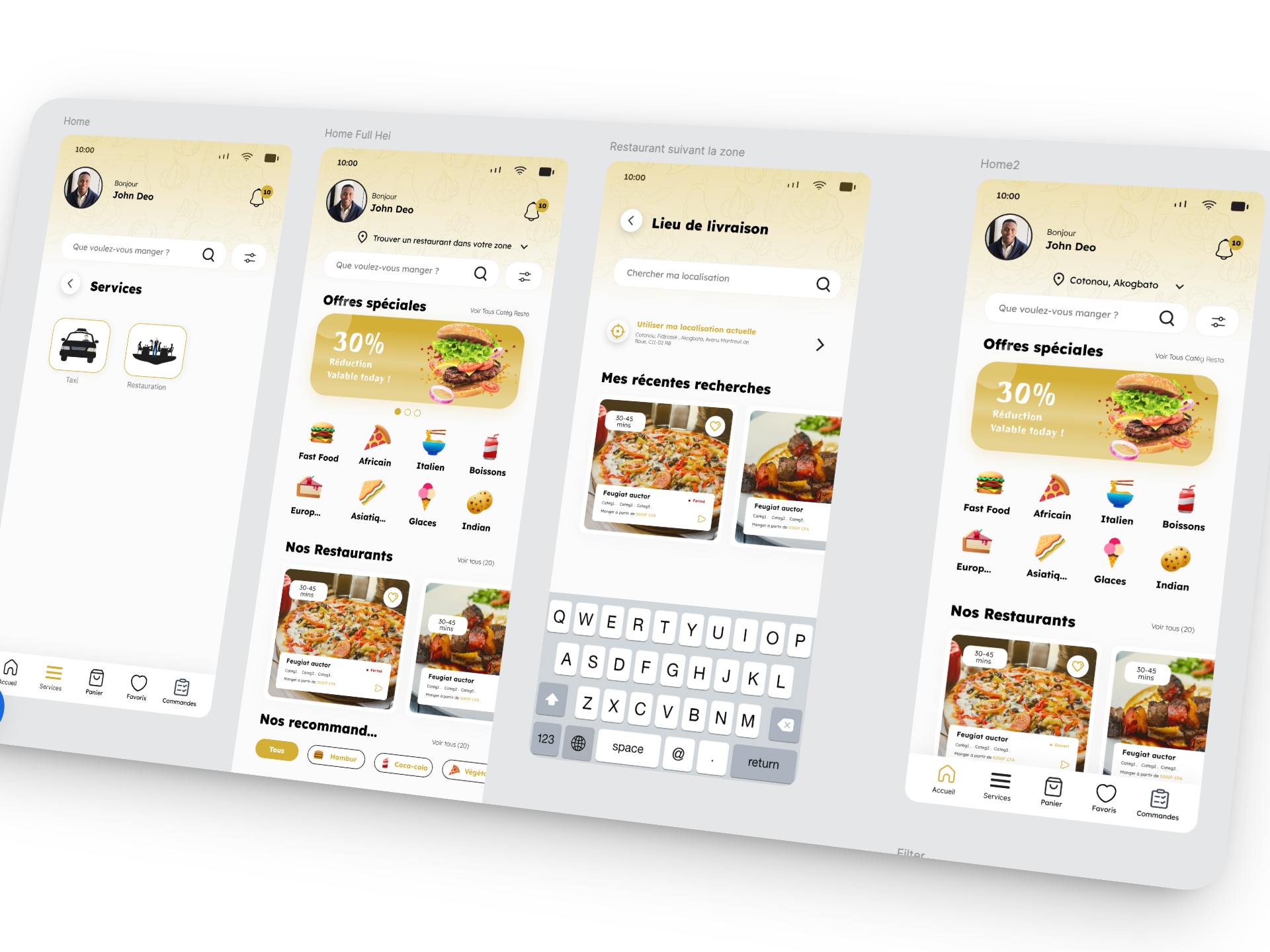
The architecture is that of a multi-service platform. Taxi is the first service delivered; food is already planned in the navigation. Every component was therefore designed to host a second service without a redesign.
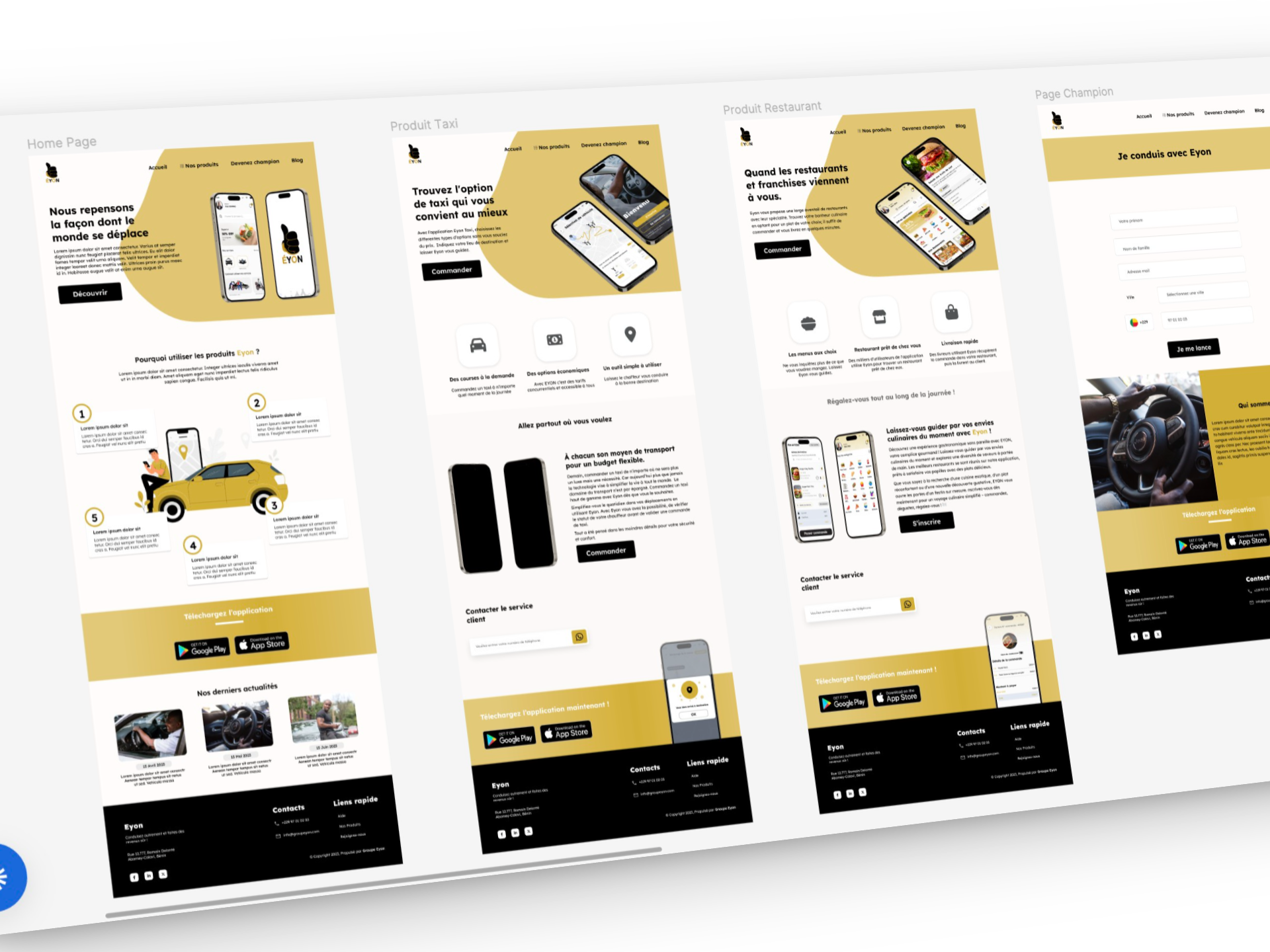
Visual direction: light background, gold and black, rounded cards, explanatory illustrations on the home page to introduce the service to users for whom this will sometimes be their first app of this kind.
Role: UI/UX design — complete journey and component system
Tools: Figma
Scope: 60 screens covering authentication, booking, ride tracking, payment, history and rating
Gallery